Medical review: Content prepared for review by a licensed pharmacist or qualified healthcare professional.
Country focus: United States
Content type: Patient education
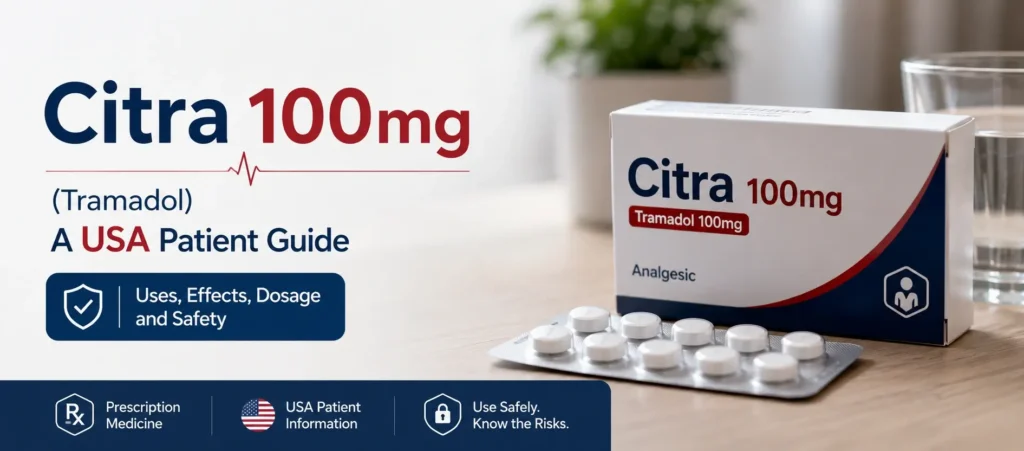
When people search for Citra 100mg in the United States, they may be looking for information about a product marketed as containing tramadol 100mg. That distinction is important because a product name found online is not necessarily the same thing as an FDA-approved prescription medicine.
The FDA issued a warning letter on March 4, 2026, identifying “Citra 100mg” as an unapproved and misbranded tramadol product being marketed to U.S. consumers through the website reviewed by the agency. The FDA also distinguishes this product from FDA-approved tramadol medicines available in the United States.
For that reason, this guide explains tramadol from a U.S. patient-safety perspective without treating an unapproved Citra-branded product as an FDA-approved medicine.
What Is Citra 100mg?
“Citra 100mg” has been used as a product name for tramadol 100mg, an opioid analgesic. However, patients should not assume that every product carrying this name is an FDA-approved tramadol product.
FDA-approved tramadol hydrochloride tablets are prescription opioid medicines indicated for adults with pain severe enough to require an opioid analgesic when alternative treatments are inadequate. Tramadol is classified as a Schedule IV controlled substance in the United States.
The distinction between the active ingredient and the specific marketed product is important:
- Tramadol is the active drug.
- 100mg describes the amount of tramadol hydrochloride in a particular tablet strength.
- Citra 100mg is a product name that has been used for a tramadol product marketed online.
- The FDA has specifically identified the Citra 100mg product reviewed in its 2026 warning as an unapproved and misbranded product for U.S. interstate commerce.
Therefore, a patient should not rely solely on the name printed on a tablet, package, or website to establish that the medicine is FDA-approved.
What Is Tramadol Used For?
Tramadol is an opioid analgesic. U.S. FDA-approved immediate-release tramadol tablets are indicated for adults who have pain severe enough to require an opioid analgesic and for whom alternative treatment options are inadequate.
This does not mean tramadol is appropriate for every type or severity of pain.
Before prescribing an opioid, a healthcare professional may consider:
- The underlying cause of pain
- The severity and duration of pain
- Whether non-opioid treatments have been tried
- Previous response to pain medicines
- Other medicines being taken
- History of substance misuse or opioid-related problems
- Respiratory and breathing risks
- Kidney and liver function
- Other individual risk factors
U.S. prescribing information recommends reserving opioid analgesics such as tramadol for situations where alternative treatments are inadequate.
How Does Tramadol Work?
Tramadol has a somewhat different pharmacological profile from many other opioid pain medicines.
It acts as a mu-opioid receptor agonist and also affects the reuptake of norepinephrine and serotonin. Its opioid activity contributes to pain relief, while its effects on these neurotransmitter systems are also relevant to certain adverse effects and drug interactions.
This combination of actions is one reason tramadol should not be viewed simply as a “milder” version of another opioid.
It still carries important opioid-related risks, including respiratory depression, misuse, addiction, overdose, and physical dependence.
Is Citra 100mg FDA Approved in the USA?
This is one of the most important questions for anyone searching for Citra 100mg in the United States.
The FDA’s March 4, 2026 warning letter states that the Citra 100mg product marketed through the website reviewed by the agency was an unapproved and misbranded drug.
This does not mean that tramadol itself is unapproved in the United States.
FDA-approved tramadol products are available in the U.S. as prescription medicines. The issue concerns the specific product marketed as Citra 100mg and its regulatory status.
For a U.S. patient, this distinction is essential.
If you encounter Citra 100mg online, do not assume that it has undergone the same FDA review, manufacturing oversight, quality controls, or labeling requirements as an FDA-approved tramadol product.
Why Does FDA Approval Matter?
FDA approval provides a regulatory framework for evaluating a drug’s quality, safety, effectiveness, manufacturing, and labeling.
Unapproved medicines may not provide the same assurances as products that have gone through the FDA approval process. Potential concerns can include:
- Incorrect amounts of active ingredient
- Different ingredients than expected
- Contamination
- Counterfeit or substituted medication
- Inadequate labeling
- Unknown manufacturing conditions
The FDA raised concerns about the online marketing of Citra 100mg in its March 2026 warning letter.
Citra 100mg Dosage: What Patients Should Know
The number “100mg” on a product does not by itself determine the appropriate dose for an individual patient.
For FDA-approved immediate-release tramadol hydrochloride tablets, U.S. labeling includes 50mg and 100mg tablet strengths. Dosing is individualized, and prescribing information recommends using the lowest effective dose for the shortest duration consistent with the patient’s treatment goals.
After appropriate titration, U.S. labeling allows 50mg to 100mg every 4 to 6 hours as needed for pain, with a maximum of 400mg per day for adults under standard immediate-release labeling. Patients with severe kidney or liver impairment require different dosing considerations.
These figures are not instructions for taking Citra 100mg.
A patient should never use the 100mg strength as a self-determined dose. The appropriate dose depends on the specific approved product, medical condition, previous opioid exposure, age, kidney and liver function, other medications, and individual risk factors.
Why You Should Not Increase Tramadol Yourself
Pain that continues despite a prescribed dose does not necessarily mean that a higher dose is appropriate.
Increasing an opioid dose can increase the risk of:
- Excessive sedation
- Respiratory depression
- Overdose
- Seizures
- Drug interactions
- Misuse and dependence
If your prescribed tramadol is no longer controlling your pain adequately, contact your healthcare professional rather than taking additional tablets.
Common Tramadol Side Effects
Commonly reported adverse effects associated with tramadol hydrochloride tablets include:
- Dizziness or vertigo
- Nausea
- Constipation
- Headache
- Sleepiness
- Vomiting
- Itching
The likelihood and severity of side effects vary between patients.
If symptoms are severe, unusual, or worsening, contact your healthcare professional.
Serious Risks of Tramadol
Respiratory Depression
One of the most serious risks of tramadol is respiratory depression, meaning breathing becomes dangerously slow or inadequate.
This risk can occur when treatment begins, after a dose increase, or when tramadol is combined with other substances that depress the central nervous system. Severe respiratory depression can be fatal.
Potential signs of an opioid overdose include:
- Very slow or difficult breathing
- Extreme sleepiness
- Difficulty waking normally
- Unresponsiveness
- Pinpoint pupils
An opioid overdose is a medical emergency and requires immediate emergency medical attention.
Addiction, Abuse and Misuse
Tramadol carries important warnings concerning addiction, abuse, and misuse.
Even when prescribed appropriately, opioid treatment should be periodically reassessed. Risk is not limited to people who have previously misused drugs.
Seizures
Tramadol can increase the risk of seizures, including at recommended doses. The risk may increase when it is combined with certain other medicines or used by people who already have seizure-related risk factors.
Anyone with a history of seizures should make sure the prescribing clinician knows about it.
Serotonin Syndrome
Tramadol can contribute to serotonin syndrome, a potentially serious condition associated with excessive serotonergic activity.
The risk may be particularly relevant when tramadol is combined with other medicines that affect serotonin.
Possible warning signs include:
- Agitation or confusion
- Excessive sweating
- Fever
- Rapid heartbeat
- Muscle rigidity or twitching
- Loss of coordination
These symptoms require prompt medical evaluation.
Citra 100mg Drug Interactions
Tramadol has clinically important interactions with several categories of medicines.
Alcohol and Other CNS Depressants
Combining tramadol with alcohol, benzodiazepines, or other central nervous system depressants can cause profound sedation and respiratory depression and may lead to coma or death.
Patients should not combine tramadol with alcohol or sedating medicines unless specifically instructed and monitored by a healthcare professional.
Antidepressants
Some antidepressants affect serotonin or tramadol metabolism.
This can increase concerns about serotonin syndrome, seizures, or changes in tramadol exposure.
Examples of medication groups that may require particular attention include:
- Selective serotonin reuptake inhibitors (SSRIs)
- Serotonin-norepinephrine reuptake inhibitors (SNRIs)
- Tricyclic antidepressants (TCAs)
- Monoamine oxidase inhibitors (MAOIs)
- Other serotonergic medicines
The FDA labeling also identifies important interactions involving CYP2D6 and CYP3A4 enzymes.
MAOIs
Tramadol is contraindicated with monoamine oxidase inhibitors and in patients who have used an MAOI within the previous 14 days.
This is one reason patients should provide a complete and current medication list before starting tramadol.
Who Should Not Take Tramadol?
FDA-approved tramadol tablets are contraindicated in several circumstances, including:
- Children younger than 12 years
- Certain patients younger than 18 years following tonsillectomy or adenoidectomy
- Significant respiratory depression
- Acute or severe bronchial asthma in an unmonitored setting or without resuscitative equipment
- Known or suspected gastrointestinal obstruction
- Known hypersensitivity to tramadol or other opioids
- Current MAOI use or MAOI use within the previous 14 days
A healthcare professional may also need to consider additional precautions for older adults, people with respiratory disease, patients with kidney or liver impairment, and people taking medications that interact with tramadol.
Tramadol and Pregnancy
Pregnancy requires specific medical consideration when opioid medicines are involved.
Prolonged opioid use during pregnancy can result in neonatal opioid withdrawal syndrome, which may be life-threatening if it is not recognized and treated.
Pregnant patients should not start, stop, or change tramadol treatment without speaking with their healthcare professional.
Current U.S. prescribing information also states that breastfeeding is not recommended during treatment with tramadol hydrochloride tablets.
Can Tramadol Cause Dependence?
Yes.
Physical dependence can develop with repeated opioid exposure. Dependence and addiction are not identical conditions, but both are important considerations during opioid therapy.
If someone has become physically dependent on tramadol, abruptly stopping the medicine can cause withdrawal symptoms.
Patients who have been taking tramadol regularly should discuss any plan to reduce or discontinue treatment with their prescribing healthcare professional.
Citra 100mg vs FDA-Approved Tramadol
The distinction can be summarized simply:
| Feature | Citra 100mg | FDA-Approved Tramadol |
|---|---|---|
| Product status | FDA identified the specific product reviewed in its 2026 warning as unapproved and misbranded. | FDA-approved tramadol products are available by prescription in the United States. |
| Active ingredient marketed | Marketed as tramadol 100mg. | Tramadol hydrochloride. |
| U.S. prescription status | Patients should not rely on online marketing to establish legitimate U.S. prescription status. | Prescription-only opioid medication. |
| Controlled substance | Product-specific regulatory status should be verified. | Schedule IV controlled substance. |
| Safety consideration | FDA raised concerns about the specific product marketed online. | Use according to FDA-approved labeling and a healthcare professional’s prescription. |
The active ingredient may be described as tramadol in both cases, but that does not make the products legally or clinically interchangeable.
How to Verify a Tramadol Prescription in the USA
If you have been given a product labeled Citra 100mg or another unfamiliar tramadol brand, ask a licensed pharmacist to verify:
- The active ingredient
- The strength
- The manufacturer
- The dosage form
- The source of the medication
- Whether the specific product is FDA-approved
- Whether it matches the prescription issued by your healthcare professional
Do not rely solely on the color, shape, markings, photograph, or website description to identify a prescription opioid.
What Should Patients Do If They Find Citra 100mg Online?
A low price, overseas shipping option, or claim that a prescription is unnecessary should not be treated as evidence that an opioid product is safe or legitimate.
The FDA’s 2026 warning specifically addressed the online marketing of Citra 100mg and stated that prescription tramadol in the United States is available only pursuant to a prescription from a licensed practitioner.
For U.S. patients, the safer approach is to:
- Obtain tramadol through a legitimate healthcare provider.
- Use a properly licensed pharmacy.
- Verify unfamiliar products with a pharmacist.
- Avoid products that do not require a prescription.
- Never share tramadol with another person.
- Keep opioid medication secured and away from children.
Key Points About Citra 100mg
- Citra 100mg has been marketed as a tramadol 100mg product.
- The FDA specifically identified the Citra 100mg product reviewed in its March 2026 warning as unapproved and misbranded.
- Tramadol itself is an FDA-approved prescription opioid in the United States.
- U.S. tramadol is classified as a Schedule IV controlled substance.
- Tramadol can cause respiratory depression, overdose, misuse, addiction, dependence, seizures, and serotonin syndrome.
- Alcohol and certain medicines can significantly increase tramadol-related risks.
- A 100mg tablet strength does not mean that 100mg is appropriate for every patient.
- Patients should obtain tramadol through legitimate U.S. healthcare and pharmacy channels.
- Unfamiliar products should be verified by a U.S.-licensed pharmacist before use.
Final Takeaway
When people search for Citra 100mg, they may be looking for information about a product marketed as tramadol 100mg. For patients in the United States, however, the product’s regulatory status is an essential part of the discussion.
The FDA’s March 2026 warning letter specifically identified Citra 100mg as an unapproved and misbranded tramadol product being marketed to U.S. consumers through the website reviewed by the agency. This should not be confused with FDA-approved tramadol medicines, which remain available by prescription for appropriately selected adults with pain severe enough to require an opioid when alternative treatments are inadequate.
Tramadol is not an ordinary over-the-counter pain reliever. It is a Schedule IV opioid with potentially serious risks, including respiratory depression, overdose, addiction, misuse, seizures, serotonin syndrome, drug interactions, and withdrawal.
If you have been prescribed tramadol, use the specific FDA-approved product and dose provided by your healthcare professional. If you have received a product labeled Citra 100mg, particularly from an online or international source, have a U.S.-licensed pharmacist verify it before taking it.
Most importantly, do not use this information to change your prescribed treatment. Your physician or pharmacist can determine whether tramadol is appropriate for you and which treatment approach best fits your medical circumstances.
Frequently Asked Questions
What is Citra 100mg?
Citra 100mg has been marketed as a product containing 100mg of tramadol. However, the FDA identified the Citra 100mg product sold through the website reviewed in its March 2026 warning letter as an unapproved and misbranded drug for U.S. consumers.
Is Citra 100mg the same as tramadol?
The Citra 100mg product identified by the FDA was marketed as tramadol 100mg. However, patients should not assume that a product marketed under this name has the same regulatory status, quality controls, or labeling as an FDA-approved U.S. tramadol product.
Is Citra 100mg FDA approved?
The FDA’s March 4, 2026 warning letter states that there was no approved drug application in effect for the Citra 100mg product offered by the website reviewed by the agency.
Is tramadol FDA approved in the USA?
Yes. FDA-approved tramadol hydrochloride products are available in the United States. They are prescription opioid medicines indicated for adults with pain severe enough to require an opioid analgesic when alternative treatments are inadequate.
Is tramadol a controlled substance?
Yes. Tramadol is classified as a Schedule IV controlled substance under U.S. federal law.
Is 100mg of tramadol a high dose?
Whether a dose is appropriate cannot be determined from the milligram amount alone. FDA-approved immediate-release tramadol tablets are available in a 100mg strength, but dosing must be individualized according to the patient’s pain, previous treatment, medical conditions, and risk factors.
Can tramadol be taken with alcohol?
Patients should avoid combining tramadol with alcohol unless specifically directed by a healthcare professional. The combination can increase central nervous system depression and the risk of serious respiratory complications.
Can tramadol cause seizures?
Yes. Seizures can occur with tramadol, including at recommended doses, and the risk can increase with certain medicines or patient-specific risk factors.
Can tramadol interact with antidepressants?
Yes. Some antidepressants can interact with tramadol and increase the risk of serotonin syndrome or seizures, while other medicines can alter tramadol metabolism. Patients should have their complete medication list reviewed by a physician or pharmacist.
Can I stop tramadol suddenly?
If tramadol has been used regularly and physical dependence has developed, abrupt discontinuation can cause withdrawal symptoms. Patients should discuss a gradual reduction plan with their prescribing healthcare professional rather than stopping suddenly.